
Moving to Charlotte, NC
Moving to Charlotte? Start With the Areas That Fit Your Real Life.
Get the practical guide to narrowing your shortlist, planning a useful visit and avoiding expensive location mistakes before you buy.
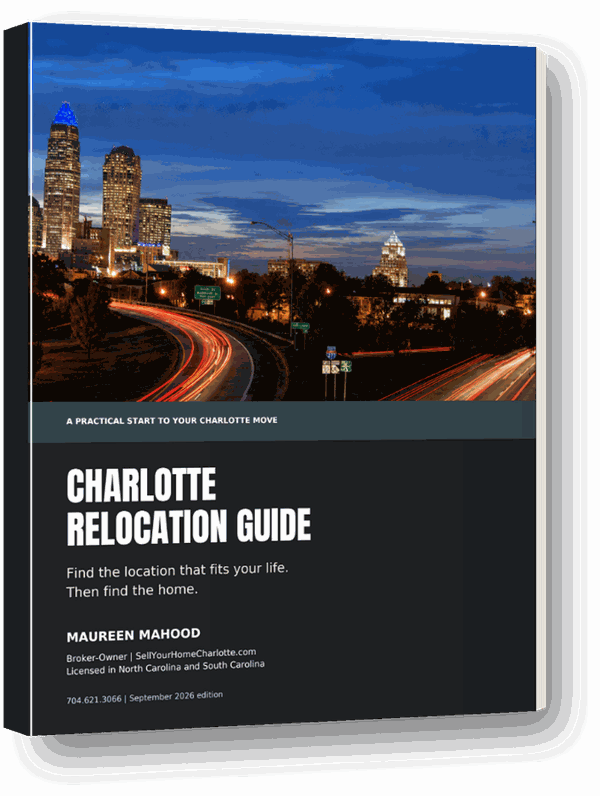
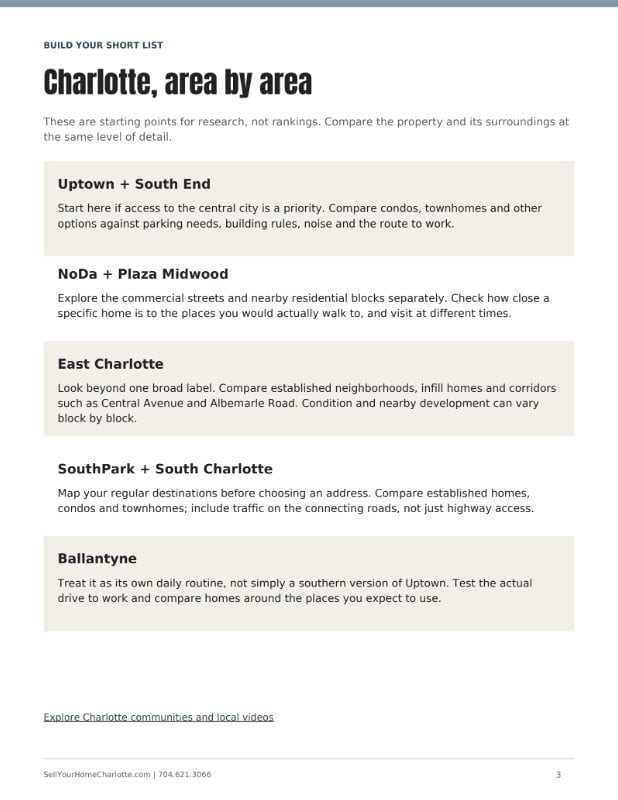
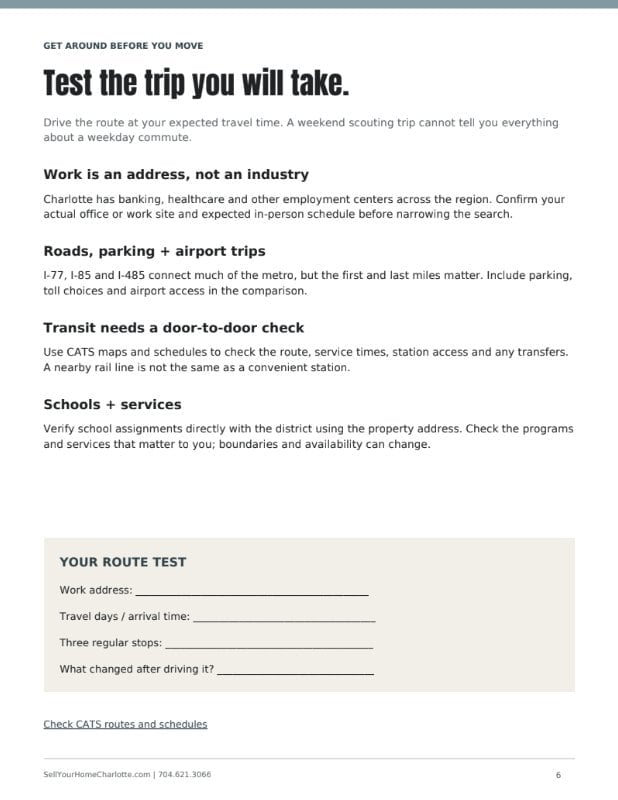
Free 9-page PDF
September 2026 edition
Inside the guide
- How to compare Charlotte areas by your real commute and routine
- The tradeoffs between the city, the suburbs, Lake Norman and South Carolina
- What ownership costs beyond the mortgage can change your budget
- What out-of-state buyers need to understand before an NC offer
- A scouting-trip and move-in checklist
Charlotte resident since 2001 · Licensed in NC and SC
Free 9-page PDF
Get the Charlotte Relocation Guide
Name and email are required. Phone is optional.
Your Charlotte point of contact
Work Directly With Maureen
I’m Maureen Mahood, broker-owner of SellYourHomeCharlotte.com. I moved here from Westchester County, New York, and have called Charlotte home since 2001.
A home can look right online and still be wrong for your routine. I help you compare locations, weigh the tradeoffs and ask the practical questions before you commit.

Broker-Owner · SellYourHomeCharlotte.com
Licensed in North Carolina and South Carolina
Watch before you start touring
Moving to Charlotte in 2026?
Housing Market Reality Check
Moving to Charlotte FAQ
What to Know Before You Move to Charlotte
Quick answers on taxes, schools, transportation and getting set up, with links to the official sources so you can look up any address yourself.
What’s the difference between Charlotte, Mecklenburg County and the Charlotte metro?
Charlotte is the city. Mecklenburg County includes Charlotte plus six towns: Cornelius, Davidson, Huntersville, Matthews, Mint Hill and Pineville. The Charlotte metro reaches into surrounding North Carolina counties and across the state line into South Carolina. A “Charlotte” mailing address does not always mean a home is inside city limits, so confirm the city or town, county and school assignment for each address you consider.
How do property taxes work in Charlotte?
Property tax is charged per $100 of assessed value. A home inside Charlotte pays the Mecklenburg County rate plus the City of Charlotte rate; homes in the six towns pay that town’s rate instead, and some bills include a solid waste fee. For the 2026–2027 fiscal year, the county rate is 49.27 cents per $100.
What are North Carolina’s income tax and sales tax rates?
North Carolina has a flat individual income tax of 3.99% for 2026. In Mecklenburg County, the combined sales tax rate is 8.25% as of July 1, 2026, after voters approved a one-cent transportation sales tax. Qualifying groceries are taxed at 2%.
Do I pay property tax on my car in North Carolina?
Yes. North Carolina charges an annual property tax on registered vehicles. It is billed together with your registration renewal through the state’s Tag & Tax Together program, so you pay both at the same time.
How soon do I need a North Carolina driver’s license and car registration?
NCDMV says new residents who plan to drive must get a North Carolina driver’s license within 60 days of establishing residence. Vehicle registration can be due sooner: when you accept a job in North Carolina or when your previous state’s reciprocity period ends, whichever comes first. You need North Carolina auto insurance, and you get your license before titling and registering your car.
How do I find out which schools serve a home?
Charlotte-Mecklenburg Schools assigns students by home address. Use the CMS assigned-school lookup with the exact address of any home you are considering, and confirm with the district before you buy because boundaries and programs can change. Outside Mecklenburg County, check with that county’s school district.
CMS new family registrationFind My Assigned School (address lookup)
Where can I look up crime information for an address?
The Charlotte-Mecklenburg Police Department publishes incident data and maps through the City of Charlotte’s open data portal. CMPD covers Charlotte and unincorporated Mecklenburg County; the six towns have their own police departments, so check with that department for addresses there. Review the data yourself. I can help you find sources, but I don’t label neighborhoods as safe or unsafe.
Does Charlotte have public transportation?
Yes. CATS runs local buses, the LYNX Blue Line light rail, the CityLYNX Gold Line streetcar and on-demand micro service. Use the CATS trip planner from the actual address to see the real route, travel time and transfers. A nearby rail line is not the same as a convenient station.
How do people get around by car, and what about airport parking?
I-77, I-85 and I-485, the outer loop, connect much of the metro, but the first and last few miles matter. North of Uptown, I-77 has express lanes with tolls that change by time of day. Charlotte Douglas International Airport (CLT) offers several parking options, including hourly, daily and valet. Check the airport’s parking page for current options and rates.
What changes if I live in South Carolina and work in Charlotte?
Taxes, insurance, vehicle rules and the home purchase process are different across the state line. Compare the full monthly payment, property and income taxes, insurance and the commute for each address, and talk with a tax professional about filing when you live in one state and work in another. North Carolina contract terms do not apply to a South Carolina purchase.
Should I rent first or buy right away?
Renting can give you time to learn the area when your job location or plans are still uncertain. Buying deserves a closer look when your work location, financing and priorities are clear. The guide walks through the questions to answer first.
Want help turning this into a shortlist of areas that fit your routine?
Rates and rules checked October 2026 from the official sources linked above. Verify current requirements before you rely on them. This is general information, not legal or tax advice.