
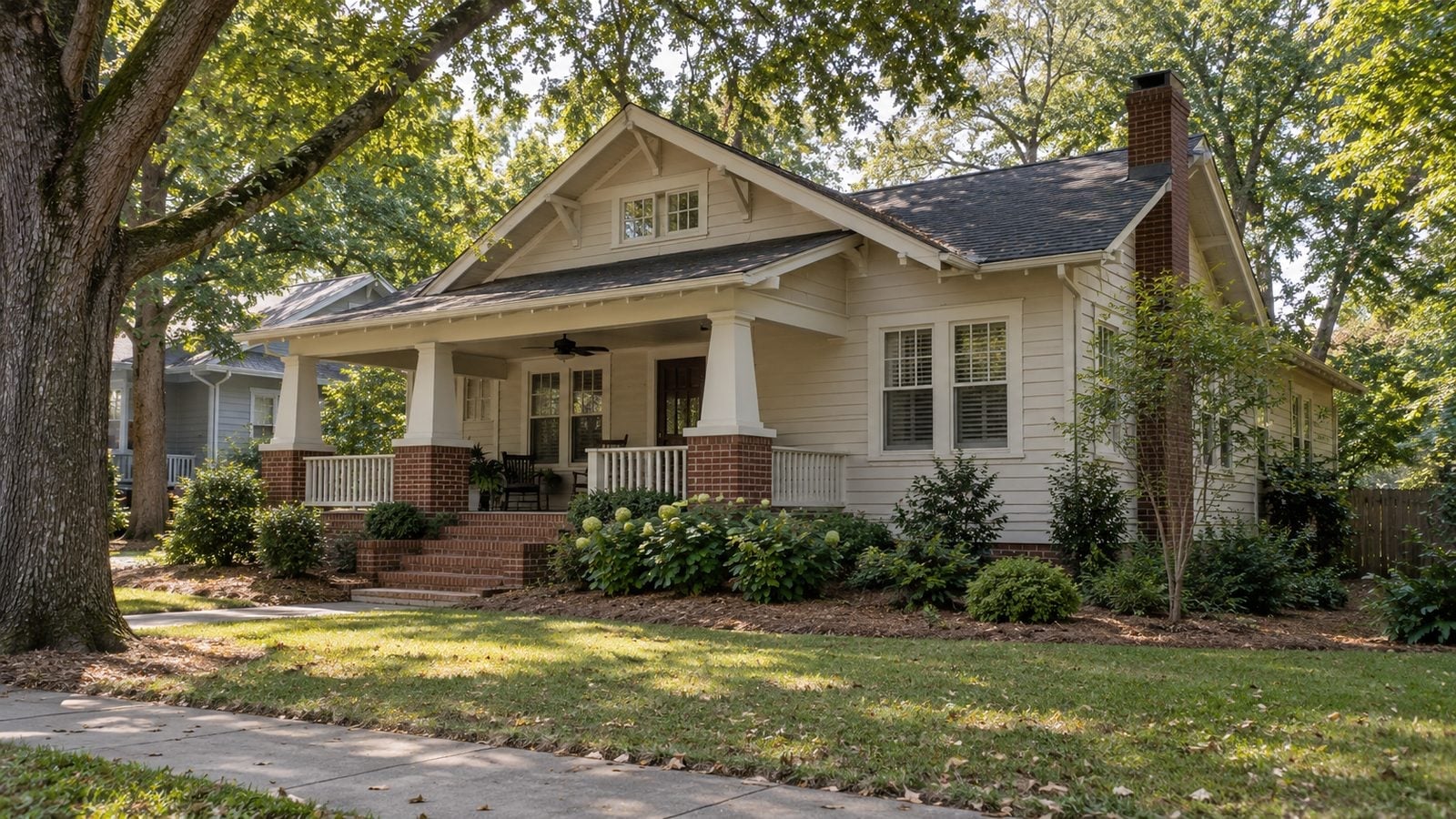
A historic Charlotte home comes with character a new build can’t fake: real wood floors, deep front porches, mature trees, and a street that already looks the way it’s always going to look. It also comes with costs that are specific to older homes and that most buyers don’t budget for until they’re already a year or two into owning one.
Older systems cost more, even when nothing’s broken yet
A home built decades ago was built to the standards and materials of its time, and those systems age out on their own schedule regardless of whether the house “feels” fine day to day. Galvanized plumbing, older electrical panels, and original HVAC systems all have a working lifespan, and in a historic home that lifespan has often already been used up once or twice by the time you buy. Budgeting for a system replacement in the first few years of ownership isn’t pessimistic, it’s realistic.
Roofs and crawl spaces are the two that come up constantly. An older roof that’s still technically holding can be hard to insure, and moisture in a crawl space under a historic home is common enough that it’s worth checking before you’re surprised by it. Both of these show up in the hidden costs of selling a home in Charlotte for the exact same reason: insurers and lenders care about them, whether you’re buying, owning, or selling.
Insurance on an older home isn’t the same conversation
Insuring a historic home is its own process. Some insurers want to see an updated electrical panel or a roof replaced within a certain number of years before they’ll write a policy at a reasonable rate, and older wiring types in particular can make coverage harder to find or more expensive. This is worth sorting out with an insurance agent before you’re under contract, not after, since it can affect your closing timeline.
If your home sits in a designated historic district
Neighborhoods like Dilworth carry a lot of their value specifically because the historic character has been preserved on purpose. If your home sits inside a designated historic district, exterior changes (a new roof material, windows, additions, even paint colors in some cases) may need to go through a review process before you can make them. That review exists to protect the character that makes the neighborhood valuable in the first place, but it does mean a straightforward update can take longer and cost more than it would on a non-historic home. Always check with the city on your specific address and district before you plan exterior work, since rules and boundaries vary block to block.
If you’re weighing a historic home against a newer one, Dilworth vs. NoDa is a useful side-by-side: one is largely historic housing stock with everything that comes with it, and the other is a genuine mix of old and new, which is a very different ownership experience day to day.
Where the money actually goes back into the house
The good news is that the right updates on a historic home do build real equity, the same way they would on any other property. Kitchens, bathrooms, roofs, systems, and usable square footage are what the market actually pays for when it’s time to sell, historic or not. The character of the home is what gets buyers in the door. Updated systems and a sound structure are what make them comfortable writing an offer.
It’s a real cost, not a reason to avoid it
None of this is meant to talk anyone out of a historic home. The character, the lot, the location, and the fact that the neighborhood isn’t going to look different in ten years are all real value that a newer subdivision can’t offer at any price. The point is to go in with a realistic budget for what an older home actually needs, instead of being surprised by it the first time a system fails or a renovation needs a review you didn’t know about.
Considering a historic Charlotte home, or wondering what yours is worth as-is? See what your home is worth and let’s talk through the real numbers.
FAQ
What makes owning a historic home more expensive than a newer one?
Older systems — plumbing, electrical, roofing, and HVAC — are more likely to need replacement soon after purchase, and insurance can cost more or be harder to secure on an older home until those systems are updated.
Do I need permission to renovate a historic Charlotte home?
If your home sits in a designated historic district, exterior changes may need review before you make them. This varies by neighborhood and specific address, so check with the city before planning exterior work.
Is insurance harder to get on an older home?
It can be. Some insurers require an updated electrical panel or a recently replaced roof before they’ll offer standard coverage, so it’s worth checking with an insurance agent early in the process.
Do historic homes still build equity the way newer homes do?
Yes. The same improvements that build equity in any home — kitchens, baths, roofs, systems, and usable space — apply to historic homes too. The historic character adds appeal; sound systems and structure add resale value.
Maureen Mahood, Broker-Owner, Sell Your Home Charlotte | Licensed in NC & SC | 704-621-3066 | Equal Housing Opportunity