
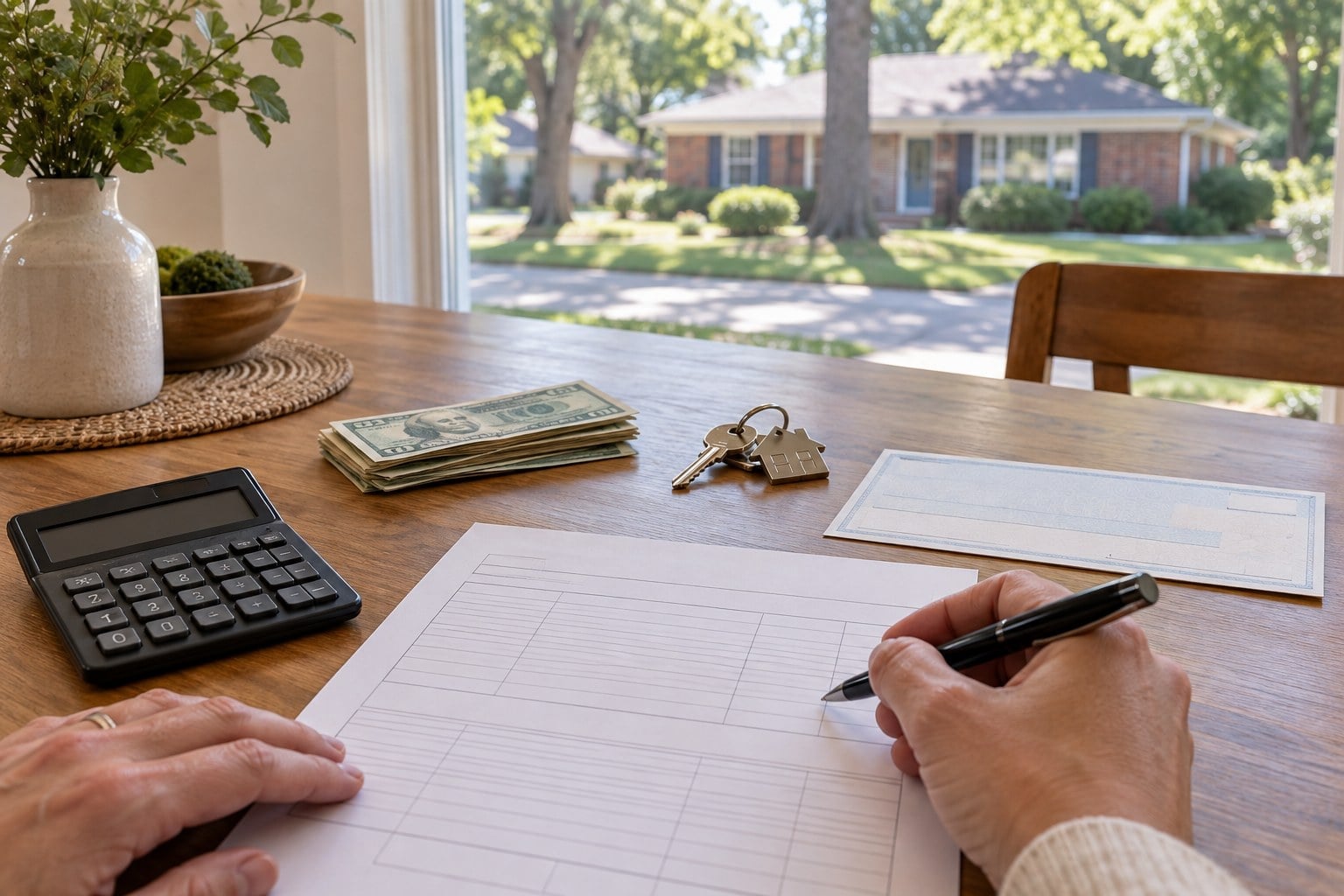
Preapproval tells a lender how much you can borrow. It doesn’t tell you how much cash you need in hand to actually close. Most Charlotte buyers need money for more than the down payment — closing costs, due diligence money, earnest money, inspections, and appraisal costs all come out of pocket, usually before the loan itself even funds. On a $400,000 purchase, a buyer might need roughly $15,000 in cash depending on financing and how much the seller agrees to cover.
Not sure what you can actually afford once all of this is factored in? Grab our Ultimate Buyer Guide before you start touring homes.
Preapproval is not the same as affordability
Getting preapproved is the right first step, but a preapproval letter is a ceiling, not a budget. It tells you what a lender will let you borrow based on income and debt. It says nothing about what you actually have on hand for everything that happens between an accepted offer and closing day. Plenty of buyers get preapproved, find a house they like, and then realize the cash side of the deal is a separate conversation entirely.
Down payment: it’s probably lower than you think
You do not always need 20% down. Some loan programs allow as little as 3% to 5% down, and down payment assistance may be available depending on your situation. If you want a full rundown of low and no-down-payment options, we’ve written about how to buy in Charlotte with a low or no down payment.
Due diligence money: paid up front, generally at risk
In North Carolina, due diligence money is paid directly to the seller early in the process, and it’s generally at risk once it’s paid — meaning you typically don’t get it back if you walk away from the deal for a reason outside your due diligence period. This is different from earnest money and it’s one of the most misunderstood parts of an NC contract. We’ve broken down exactly how due diligence money works and what happens if it’s not paid on time.
Earnest money, inspections, and appraisal costs
On top of due diligence money, buyers also need funds for earnest money, home inspection costs, and the appraisal. None of these are optional, and they all typically come due before closing, not at closing. Add in standard closing costs — title work, recording fees, prepaid taxes and insurance — and you can see why the total cash number is usually bigger than just “the down payment.”
A real example
On a $400,000 purchase, a buyer might need roughly $15,000 in cash, depending on the loan program and how much the seller agrees to cover in concessions. That number moves depending on your down payment size, whether you’re using an assistance program, and what you negotiate with the seller. It’s also why understanding what happens once your offer is accepted matters — a lot of these costs show up in that window between contract and closing, not before.
What to do before you start looking
Talk to your lender about the full cash-to-close number, not just the down payment. Ask what’s covered by down payment assistance programs you might qualify for, like NC’s 1st Home Advantage program. And build in a buffer beyond the minimum, since due diligence, inspection, and appraisal costs are due on a schedule, not all at once.
Want a clear picture of your total cash-to-close before you make an offer? Get our Ultimate Buyer Guide or reach out and we’ll walk through the numbers together.
FAQ
How much cash do I need to buy a house in Charlotte, NC?
It depends on your loan program and the price of the home, but on a $400,000 purchase, a buyer might need roughly $15,000 in cash covering the down payment, due diligence money, earnest money, inspection costs, appraisal costs, and closing costs.
Do I need 20% down to buy a home in Charlotte?
No. Some loan programs allow as little as 3% to 5% down, and down payment assistance programs may be available depending on your situation.
What is due diligence money in North Carolina?
It’s money paid directly to the seller early in the contract process, separate from earnest money. It’s generally at risk once paid, meaning you typically don’t get it back if you walk away outside your due diligence period.
Does preapproval mean I know what I can afford?
Not entirely. Preapproval shows what a lender will let you borrow. It doesn’t account for due diligence money, earnest money, inspection and appraisal costs, or closing costs — all of which affect the actual cash you need on hand.
Maureen Mahood, Broker-Owner, Sell Your Home Charlotte | Licensed in NC & SC | 704-621-3066 | Equal Housing Opportunity