
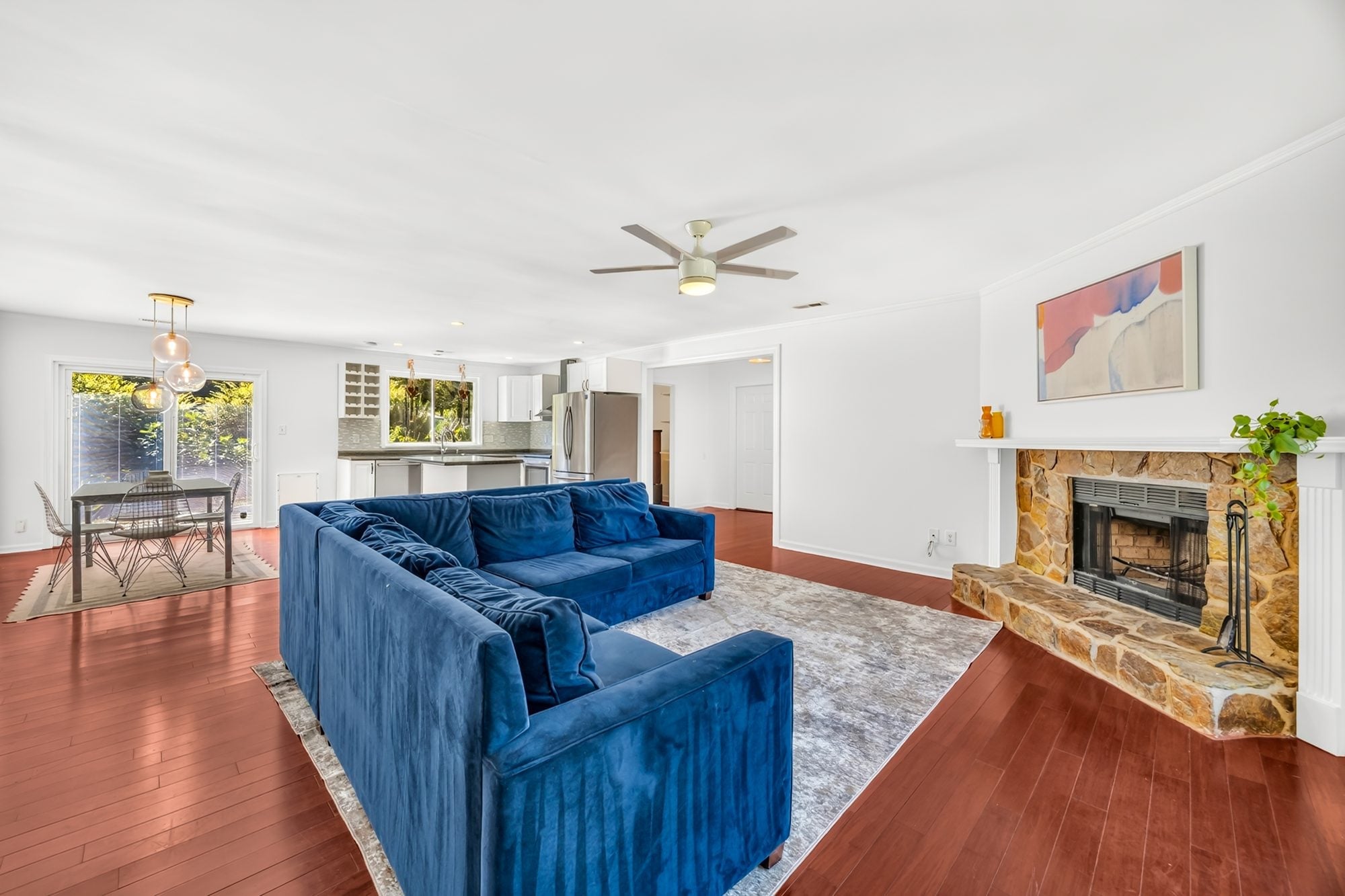
Buyers consistently miss the same handful of things on a showing: smell, water stains, what’s outside the windows, and anything a staged room is designed to distract from. A home’s presentation is built to make you stop looking — fresh paint, good lighting, and furniture placement all work in the seller’s favor. Here’s what to check instead, and why a showing alone usually isn’t enough to catch it.
Smell
Smell is one of the fastest things buyers register and one of the easiest for sellers to mask. A strong candle, fresh paint, or an air purifier running during a showing isn’t automatically a red flag, but it’s worth asking yourself why it’s there. Musty or mildew smells, even faint ones, are worth tracing to a source — they often point to moisture somewhere, whether that’s a crawlspace, a bathroom, or a basement.
Water stains and signs of past leaks
Look up, not just around. Ceiling stains, especially near bathrooms, kitchens, or exterior walls, can mean a past or current leak — even if it’s been painted over. Check under sinks for warped cabinet bottoms or discoloration. A fresh paint job in just one section of a ceiling or wall is worth asking about directly; sellers aren’t required to volunteer every repair, but a direct question about a specific area gets a more useful answer than a general “any issues with the house?”
What’s actually outside the windows
Showings happen during the day, often on a weekend, which means you rarely see a neighborhood at its real baseline. Drive by at a different time — weekday evening, early morning — to get a sense of traffic, noise, and parking. Stand in the backyard and listen for what’s nearby: a busy road, a rail line, a school, construction. None of these are automatically dealbreakers, but they’re easier to notice on a second visit than during a 20-minute showing where you’re focused on room layouts.
Storage, not just square footage
Closets get minimized or skipped in a quick walkthrough, but storage is one of the more common post-move regrets. Open closet doors. Check whether the garage is actually usable for a car or whether it’s realistically storage-only. A house that looks spacious on a listing photo can still feel tight if the storage doesn’t match how you actually live.
The mechanical stuff nobody photographs
Nobody stages the water heater or the electrical panel, which means buyers rarely look at them — but age and condition here matter more to your actual cost of ownership than paint color. Check the manufacture date on the water heater and HVAC unit if you can find it (usually a sticker on the unit itself). A furnace or AC system near the end of its typical lifespan is a real cost to plan for, even if everything’s currently working fine.
Why a showing alone isn’t enough
None of this means you need to distrust every home you tour — it means a showing is a first look, not a full picture. That’s exactly what a home inspection is for, and it’s worth going in already knowing the specific red flags North Carolina inspectors flag most often so you’re not seeing them for the first time in a 40-page report. If you’re touring new construction specifically, the checklist is different — the final walkthrough checklist for new builds covers what to catch before a builder closes out your punch list.
It’s also worth knowing that in North Carolina, your agent generally can’t tour homes with you at all until you’ve signed a buyer agreement — so the agent walking the house with you, pointing out what you might be missing, is part of what that agreement is actually for.
And if you’ve toured several homes and nothing has felt right, or you’ve made offers that didn’t go anywhere, it’s worth stepping back and asking why — sometimes it’s not bad luck, it’s a mismatch between what you’re touring and what you actually need.
Touring homes soon? Get the Ultimate Buyer Guide for a full room-by-room checklist you can bring with you.
FAQ
What do buyers most commonly miss when touring a house?
Smell, water stains or signs of past leaks, what’s actually outside the windows at a different time of day, real storage capacity, and the age of major mechanical systems like the water heater and HVAC.
How long should I spend touring a home?
Longer than a typical 15- to 20-minute showing allows. If you’re seriously interested, ask about a second visit at a different time of day before you write an offer.
Is a showing enough to know if a house has problems?
No — a showing is a first impression, not an inspection. A licensed home inspection is what actually catches structural, electrical, plumbing, and mechanical issues.
Why do I need a signed agreement before an agent can show me homes in North Carolina?
Since August 2024, North Carolina requires a signed buyer agreement before an agent can tour a home with you. It spells out how the agent is paid and what they’re responsible for.
Maureen Mahood, Broker-Owner, Sell Your Home Charlotte | Licensed in NC & SC | 704-621-3066 | Equal Housing Opportunity