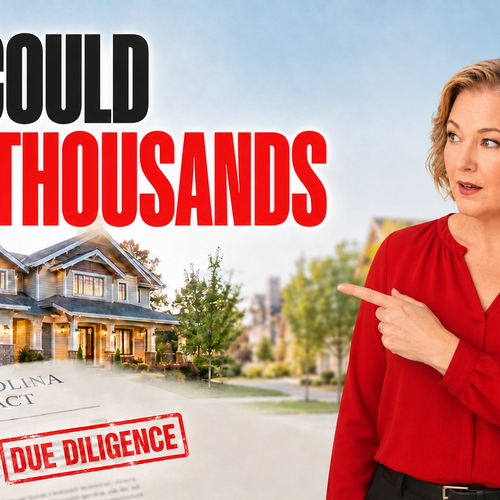

Buying a home in Charlotte, North Carolina, may not work the same way it does where you live now. North Carolina has a different contract process. The Charlotte area stretches across many towns, counties and even two states. A short distance on a map can also mean a much longer drive than you expect.
Before you make an offer, here are five Charlotte home-buying surprises you need to understand:
-
North Carolina due diligence money can be at risk.
-
“Charlotte” may mean a much larger area than the city itself.
-
Commute time matters more than distance.
-
Crawl-space moisture needs careful attention.
-
The house can affect your homeowners insurance options.
Understanding these issues early can help you choose the right area, build a safer offer and avoid expensive surprises after you go under contract.
1. How does due diligence work when buying a home in North Carolina?
North Carolina uses a due diligence process that surprises many buyers moving from other states.
The due diligence fee is a negotiated amount of money paid directly to the seller after the contract becomes effective. In return, the buyer has the right to investigate the property and terminate the contract during the agreed due diligence period.
The important part is this: The due diligence fee is generally not refundable.
If you close on the home, the fee is normally credited back to you at closing. But if you terminate during the due diligence period, the seller will usually keep that money. That may still be true if the inspection finds a major problem, the appraisal is low, financing falls apart or the home is difficult to insure. Refunds are limited to specific contract terms and unusual circumstances.
The North Carolina Real Estate Commission explains that the due diligence fee is generally nonrefundable, except in limited situations.
During your due diligence period, you may need to complete:
-
The home inspection
-
Additional inspections, if needed
-
Repair negotiations
-
The appraisal
-
Homeowners insurance research
-
Loan underwriting
-
A review of HOA documents, permits or other property records
The amount of the due diligence fee and the length of the due diligence period are negotiable. Your agent should explain the risk before you decide what to offer.
Do not put more due diligence money at risk than you can afford to lose.
2. What areas are considered part of Charlotte?
People often use “Charlotte” to describe the whole region, not only the City of Charlotte.
The Charlotte metro crosses county and state lines. It includes communities such as Matthews, Mint Hill, Huntersville, Davidson, Concord, Gastonia, Belmont, Mount Holly, Pineville, Fort Mill and Rock Hill.
Charlotte itself is in North Carolina. Fort Mill and Rock Hill are in South Carolina. Other nearby towns may be in Mecklenburg, Union, Cabarrus, Gaston, Iredell or York County.
This matters because where you buy can affect:
-
Property taxes
-
Utilities and service providers
-
School assignments
-
Your daily commute
-
City or county services
-
HOA rules
-
The size, age and style of home available within your budget
Most people who say they live in Charlotte do not live in Uptown. They live in neighborhoods and nearby communities spread across a large area.
You may begin your search thinking you must live inside Charlotte city limits. After comparing prices, homes and drive times, you may find that a nearby town is a better match.
There is no single “best” Charlotte suburb for every buyer. The right location depends on your budget, commute, housing needs and how you want to use your time.
3. Why do Charlotte buyers measure commutes in minutes instead of miles?
A home can look close to work on a map and still create a difficult daily commute.
Traffic on I-77, I-85, I-485 and Independence Boulevard can change during the day. A drive that takes 20 minutes at 10 a.m. may take much longer during the morning or evening rush.
When comparing Charlotte homes, do not ask only, “How many miles away is it?” Ask, “How long will this drive take when I actually need to make it?”
Before buying, test the trip at the correct time of day. Check the drive to:
-
Work
-
School or childcare
-
The airport
-
Medical appointments
-
Family members
-
Places you visit every week
Also look at more than one route. A home with two practical routes may give you more options when there is traffic, road construction or an accident.
If you work from home, location still matters. Think about how often you travel to the airport, Uptown Charlotte, client meetings or other parts of the metro.
In Charlotte, five extra miles can sometimes change your daily life more than the size of the house.
4. Should Charlotte homebuyers worry about crawl-space moisture?
Many Charlotte-area homes, especially older homes, were built over crawl spaces. A crawl space is not automatically a problem. Moisture inside it can be.
Moisture may come from poor drainage, plumbing leaks, HVAC condensation, outside air or uncovered soil. Over time, high moisture can contribute to mold, damaged insulation, wood problems and conditions that attract pests.
The NC State Extension mold and moisture checklist recommends checking crawl spaces for leaks and proper moisture protection.
During the inspection, ask the inspector to look for:
-
Standing water or damp soil
-
Plumbing leaks
-
Wood damage
-
Mold-like growth
-
Damaged or missing insulation
-
Missing or damaged vapor barriers
-
Drainage problems near the foundation
-
Signs of termites or other wood-destroying insects
A moisture reading is one piece of information. It should be considered with the weather, recent rainfall, ventilation, drainage and the condition of the wood.
Do not assume every crawl space needs a full encapsulation system. First, identify where the moisture is coming from. The right solution may be drainage work, a plumbing repair, a better vapor barrier, a dehumidifier or a larger crawl-space project.
Your home inspector can document the conditions. A qualified crawl-space, structural or pest professional may be needed for a more detailed opinion.
5. Can a house be difficult or expensive to insure in Charlotte?
Yes. The condition and history of a house can affect the cost and availability of homeowners insurance.
Insurance companies may ask questions about:
-
The age and condition of the roof
-
Older electrical panels or wiring
-
Certain plumbing materials
-
Previous insurance claims
-
Water damage
-
Trampolines, pools or other property features
-
The home’s location and rebuilding cost
A home may qualify for insurance but cost more than you expected. In other cases, an insurer may require repairs before issuing coverage.
Contact an insurance agent early in the due diligence period. If the house has an older roof, electrical concerns, plumbing issues or a claim history, it may be smart to ask questions before making an offer.
Give the insurance estimate to your lender. Your premium is normally part of your total monthly housing payment. A higher premium could push the payment outside your budget.
Do not wait until a few days before closing to find out that the house is difficult or expensive to insure.
What should you do before moving to Charlotte and buying a home?
Start planning before you tour houses.
A local lender can help you understand your full payment and cash needed to close. An insurance agent can explain current coverage concerns. A buyer’s agent can help you compare locations, research homes and understand the North Carolina contract before you put money at risk.
The earlier we talk, the easier it is to match your budget, commute and housing needs with the right parts of the Charlotte area.
If you are planning to move to Charlotte, download my free Ultimate Charlotte Home Buyer Guide or contact SellYourHomeCharlotte.com to schedule a relocation consultation.
I can help you narrow your options before you get on a plane or walk into your first Charlotte home.
I’m Maureen Mahood, broker-owner of SellYourHomeCharlotte.com. I have helped people buy and sell homes throughout the Charlotte metro for more than 10 years.
Frequently Asked Questions About Buying a Home in Charlotte
Is Charlotte, North Carolina, a due diligence state?
North Carolina uses a due diligence process in its standard residential contract. Buyers negotiate a due diligence period and may pay a due diligence fee directly to the seller. The fee is generally not refundable if the buyer terminates.
How much due diligence money do I need in North Carolina?
There is no fixed amount. The due diligence fee is negotiated with the seller. The amount may depend on the home, price, competition, market conditions and length of the due diligence period.
Is due diligence money refunded if the inspection is bad?
Usually not. A buyer may terminate during the due diligence period, but the seller generally keeps the due diligence fee. Limited exceptions may apply under the contract.
Does the Charlotte metro include South Carolina?
Yes. The Charlotte-Concord-Gastonia metro crosses the North Carolina and South Carolina state line. Fort Mill and Rock Hill are popular South Carolina communities within the greater Charlotte region.
What is the best Charlotte suburb for buying a home?
There is no one best suburb. Compare your budget, commute, preferred home type, taxes, services and daily needs. A nearby town may offer a better fit than Charlotte city limits.
Are crawl spaces common in Charlotte homes?
Yes. Many Charlotte-area homes have crawl spaces, especially in established neighborhoods. Buyers should have the crawl space inspected for moisture, leaks, wood damage and pest activity.
When should I get a homeowners insurance quote?
Contact an insurance agent as early as possible after going under contract. If the property has an older roof, electrical concerns, unusual plumbing or past claims, consider asking questions before making an offer.
How should I compare Charlotte commute times?
Measure the drive in minutes, not only miles. Test the route at the time you normally travel and look at more than one possible route.
Check out this article next