
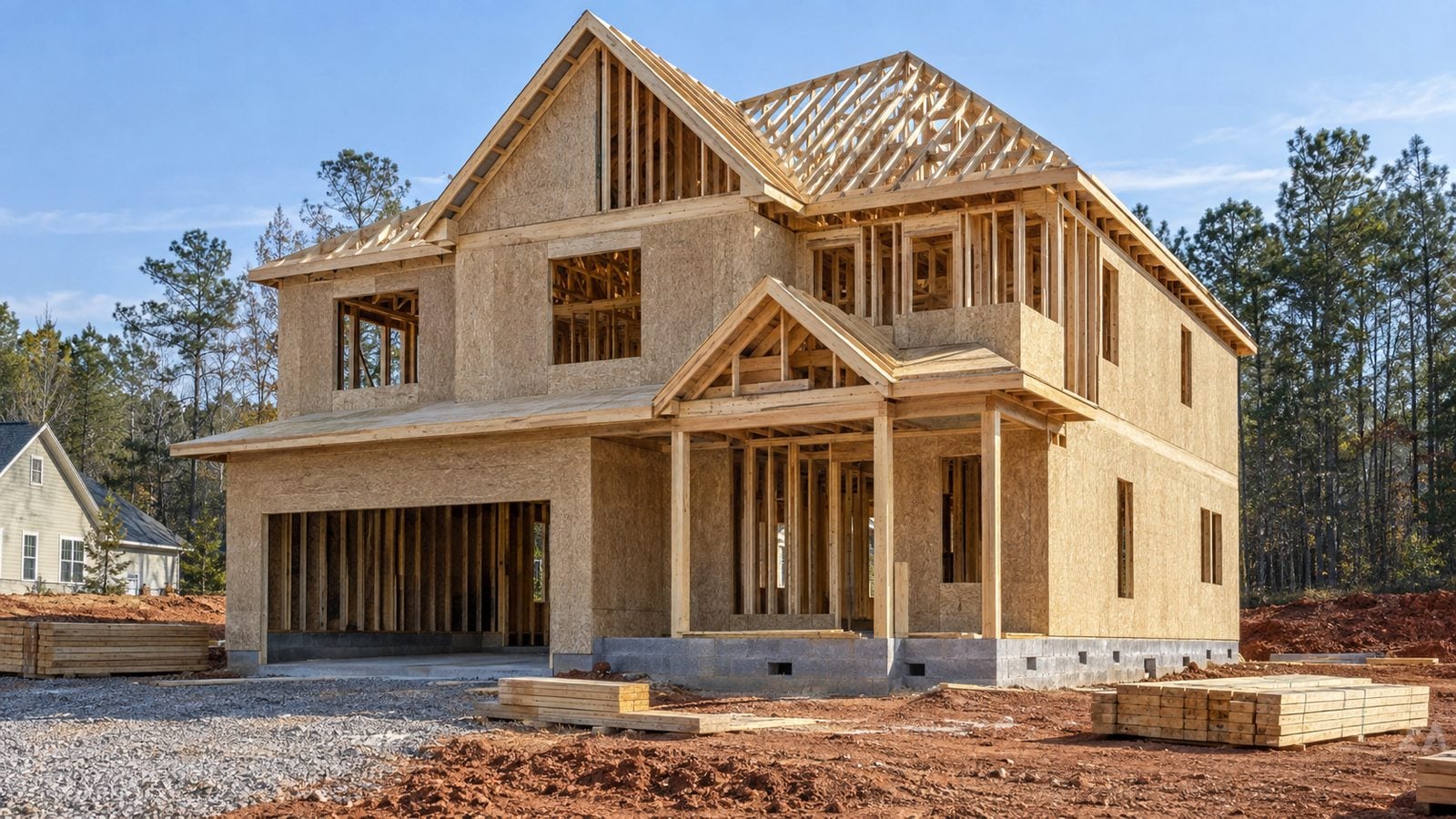
Charlotte keeps building, and for a lot of buyers a new home is the most realistic option on the board right now. New construction also runs on a completely different set of rules than resale, and the buyers who get hurt are almost always the ones who assumed it worked the same way. Here is what to understand before you walk into a model home.
Before you tour anything, get your numbers straight with our Ultimate Buyer Guide.
Bring your agent on the first visit
This is the one that costs people the most, and it is entirely avoidable. Most builders require your agent to be registered with them on your very first visit to the community. Walk in alone, sign the visitor card, and you may have given up your right to representation on that community permanently.
Understand who the person at the model home works for. They are pleasant, they are knowledgeable, and they represent the builder. Not you. Having your own agent costs you nothing at the builder’s table, and it means someone is reading the contract on your side.
The contract is the builder’s, not the standard one
A resale purchase in North Carolina uses a standard form with a due diligence period and a due diligence fee, which we explain in our guide to NC due diligence money. New construction usually does not use that form at all. Builders write their own contracts, and those contracts are written to protect the builder.
Read carefully for:
- Your deposit and whether it is refundable. Under what conditions, and who decides.
- Completion dates. Look for how much the builder can delay without consequence, and what happens to your rate lock if they do.
- What happens if you do not close. Including reasons outside your control.
- Change order rules. When your selections lock, and what changes cost after that point.
- Dispute resolution. Many builder contracts require arbitration.
The base price is not the price
The number on the sign is the base home on the base lot with base finishes. Real costs stack on top: lot premiums, structural options chosen before construction starts, design center selections, and often landscaping or appliances you assumed were included.
Ask for a full itemized breakdown of the model you toured versus the base home. The model is almost always loaded. Ask specifically what is not included, and get it in writing before you get attached.
Builder incentives and the preferred lender
Builders frequently offer real money toward closing costs or a rate buydown if you use their affiliated lender. Those incentives can be genuinely valuable and they are worth considering.
They are also worth checking. Get at least one competing quote from an outside lender and compare the total cost of the loan, not just the rate or the incentive. Sometimes the builder’s package wins clearly. Sometimes the incentive is offset by other terms. You will not know which without the comparison, and you are allowed to ask.
Yes, get an inspection
New does not mean flawless. It means nobody has lived in it long enough to find the problems yet. Independent inspections on a new build are normal and worth every dollar.
- A pre-drywall inspection, while framing, wiring, and plumbing are still visible.
- A final inspection before closing.
- An eleven-month inspection, before a typical one-year builder warranty expires.
A municipal inspection confirms code compliance. It is not the same thing as someone inspecting the house on your behalf.
Understand the warranty
Most new homes come with a tiered warranty: roughly one year on workmanship and materials, around two years on systems, and a longer term on structural items. Get the actual warranty document and read what is covered, for how long, and what the claim process is. Ask how the builder handles warranty calls after closing, because that answer varies a lot.
Think about the resale before you buy
In a new community you will eventually be selling in competition with the builder, who can offer incentives you cannot match and a brand new home next door. Lot position, floor plan, and the options you choose all affect how your home holds up against that. Choosing widely appealing structural options over highly personal finishes tends to age better.
What to budget
Your cash needs on a new build are not the same as a resale. Deposits, design center selections, and inspections all come at different points. We walk through the full cash picture in how much cash you actually need to buy a home in Charlotte.
Looking at where to build? Our Charlotte community guides are a good starting point. Then call me before you tour, not after.
FAQ
Do I need a real estate agent to buy new construction?
You are not required to have one, but the sales agent at the model home represents the builder. Having your own agent costs you nothing at the builder’s table and puts someone on your side of the contract.
When do I have to register my agent with a builder?
Usually on your very first visit to the community. If you tour alone first, many builders will not allow representation on that community afterward.
Should I use the builder’s lender?
Sometimes. Builder incentives can be significant. Get at least one outside quote and compare the total cost of the loan before deciding.
Should I get an inspection on a brand new home?
Yes. A pre-drywall inspection, a final inspection, and an eleven-month inspection before the first-year warranty expires are all worth doing.
Is new construction a good deal in Charlotte right now?
It depends on the community, the incentives being offered, and how it compares to resale in the same area. That is a real comparison worth running before you commit, and it is one I can run with you.
Maureen Mahood, Broker-Owner, Sell Your Home Charlotte | Licensed in NC & SC | 704-621-3066 | Equal Housing Opportunity